
CPE recognizes faculty and staff from three Kentucky colleges for excellence in student-focused efforts
March 27, 2026
Faculty and staff from Eastern Kentucky University, Bellarmine University, and Elizabethtown Community and Technical College have been recognized for their dedication to student success by the Kentucky Student Success Collaborative (KYSSC), a unit of the Kentucky Council on Postsecondary Education.
Based on self- and peer nominations, KYSSC recognized honorees for their positive impact on student experiences and institutional outcomes at its annual Kentucky Student Success Summit, which drew more than 400 faculty and staff from across Kentucky’s postsecondary institutions.
"We're proud to recognize educators and institutions that put students at the center of everything they do," said CPE President Aaron Thompson. "Student success isn't just measured by metrics. It's found in the daily work happening across departments and campuses, where faculty and staff meet students where they are and help them achieve their goals."
Recipients and their respective institutions and awards are listed below.
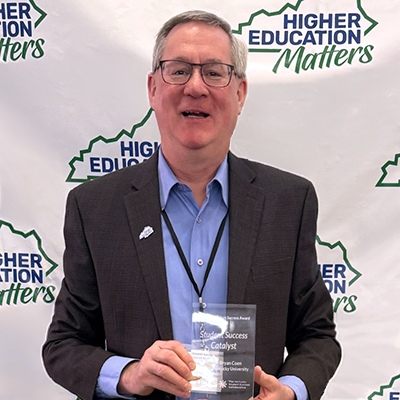
Patrick Bryan Coen, Eastern Kentucky University (EKU)
Student Success Catalyst Award
A senior lecturer with the Department of Mathematics and Statistics at EKU, Coen is known for his innovative instruction, student-centered course design and deep commitment to students. His work has led to the redesign of mathematics course formats and curriculum - often a barrier for students - making it more accessible and achievable.
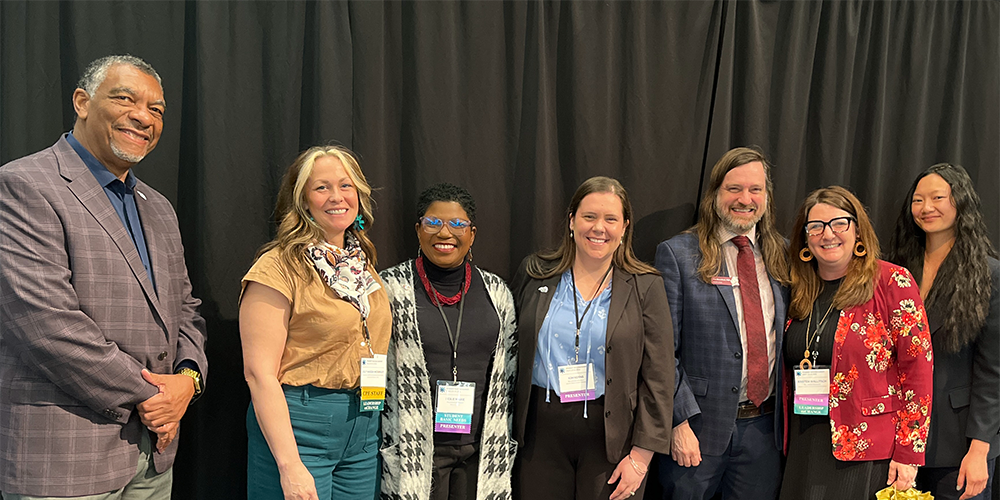
Student Success Task Force, Bellarmine University
Transformation Team Award
This cross-divisional team, which integrates professionals representing academic affairs, student affairs and enrollment management, has made substantial contributions to the university’s improved retention rates through proactive interventions. The first year is often the most critical in defining student success, especially among first-generation and Pell-eligible students. The group leveraged first-year student performance data, using it to guide real-time decisions and implement immediate student support services. The task force’s work resulted in a 92.1% fall-to-spring retention rate for the Fall 2025 first-year cohort – an all-time high for the university.
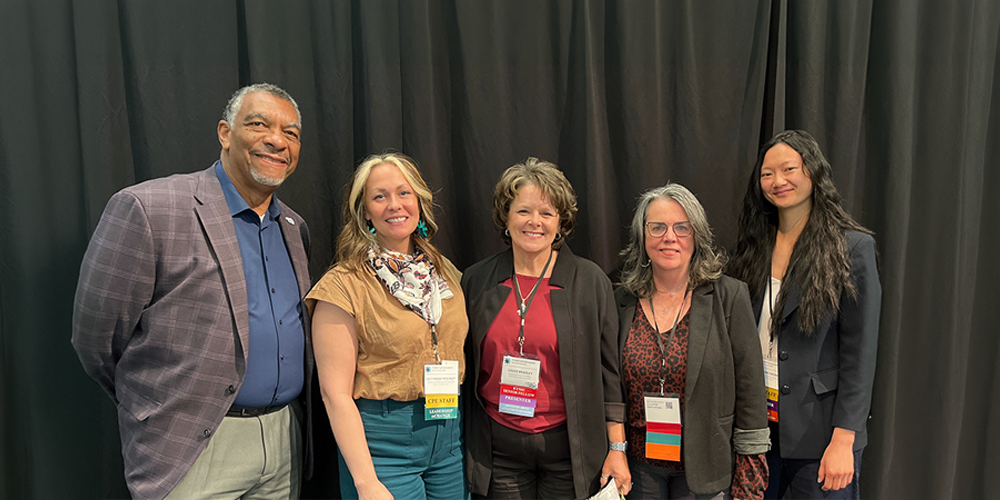
Credit for Prior Learning Collaborating Team, Eastern Kentucky University (EKU)
Strategic Partnership Award
The team, which is a network of staff specializing in academic affairs, administration, military and veteran services, career services or other areas, was recognized for its work in translating knowledge gained outside of a traditional academic environment into course credits that can be applied toward degree requirements (known as “credit for prior learning”). Students over the age of 25 are more likely to be working full-time, parenting or both, making them more susceptible to dropping out due to the time and costs involved in credential and degree completion. Accelerating time to completion through awarding credit for prior learning improves the likelihood that these students will succeed. During the fall 2025 semester alone, EKU was able to award over 1,000 credits to 175 students through the pathways developed by the team.
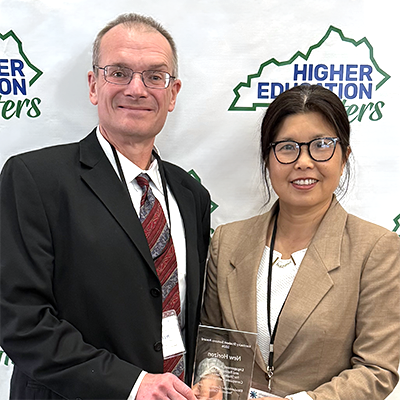
Shawn Kellie and Miky Wright, Elizabethtown Community and Technical College (ECTC)
New Horizon Award
Kellie, dean of physical sciences, and Wright, associate professor of mathematics, were recognized for their innovations to ECTC’s MAT 100 College Algebra Workshop, which is a supplemental course taken by students enrolled in College Algebra. Mathematics courses, especially when offered online, often have low success rates due to the complexity of the subject and limited opportunities for students to engage with faculty. To combat this, Kellie and Wright restructured faculty workloads, allowing 20 hours weekly, including evenings and weekends, dedicated to student support for the course. They also required students and faculty to attend video check-ins to prevent students from feeling isolated. Their work has increased the course’s success rates, going from 54% to 77%, and reduced withdrawal rates from 67% to just 5%.
Last Updated: 3/27/2026