Building a stronger network of support for struggling students: A Q&A with Arion Jett-Seals
October 27, 2026
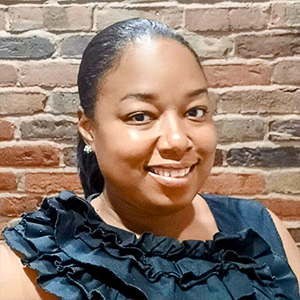
Arion Jett-Seals serves as associate director for basic needs at the Kentucky Student Success Collaborative (KYSCC). A self-described “champion for needs access and holistic wellness,” she works with Kentucky’s postsecondary institutions to strengthen policies, services and outreach related to students’ basic needs, including food, housing, childcare and mental health resources.
The cost of basic necessities has increased significantly, putting additional pressure on budgets of students and their families. What are Kentucky’s campuses seeing in terms of students’ need for basic needs services, and how are institutions responding?
We're hearing that when one thing becomes more expensive or less accessible, it leads to multiple challenges in other areas of our students’ lives.
What I'm especially encouraged by is the growing recognition that we need a proactive response; we can't simply wait for students to reach a crisis before offering support.
The KYSSC is working with institutions to strengthen how they identify needs, connect students with resources, and make those supports, like campus food pantries, emergency financial assistance, public benefits sign-up assistance, a more accessible part of the college experience.
What are some of the biggest (service-provision) challenges campuses face in addressing students’ basic needs?
One of the biggest challenges is that the need is often greater than institutional capacity available to address it. We have campus professionals who are incredibly committed to helping students, but they're working with limited staff, limited funding, and sometimes limited information about the resources available outside their institutions.
Another challenge is that basic needs services don't fit neatly into one department or office. A student with multiple needs often must visit several offices, each with different processes and eligibility requirements - resulting in a process that is difficult for students to trust and navigate.
That's why so much of the KYSSC’s work focuses on coordination and capacity building. We want to help campuses move from having individual services available to having a connected system of support that students can navigate.
Are there particular gaps in services or policies that could benefit from additional attention or action at the state level?
Absolutely - and I think this is where statewide collaboration becomes so important. Some of the barriers students experience simply cannot be resolved by an individual institution.
Childcare is a great example. A college may want to support parenting students, but if there aren't enough affordable childcare providers in the surrounding community, that campus can't solve the problem alone.
We also need to continue examining how public benefit policies and eligibility requirements intersect with postsecondary education. We want to make sure we're not unintentionally creating barriers.
Lastly, we need to strengthen our data infrastructure to understand which supports are making a difference in our students’ success. That's an area where Kentucky has tremendous potential because of our ability to connect education, workforce, and public benefit data.
KYSCC recently launched a toolkit to help campuses improve outreach about basic needs services. In addition to communication templates, the toolkit includes a playbook on how to talk about these issues. What prompted the development of the toolkit, and what guidance does the playbook offer campuses about communicating with students?
The need for a toolkit really grew out of listening to students about their experiences finding basic needs assistance. Rather than seek out the “basic needs office” or search the college website, they often turn to someone they already know and trust. We call those people “Trusted Sources,” and they might be a faculty member, an advisor, a coach, or even someone they regularly interact with on campus.
That was a critical realization for us because it challenged the long-held idea that posting formulaic information online or in their email inbox is enough. Instead, we learned we have to think about how students receive information, who they trust, and, most importantly, whether our communication makes them feel comfortable seeking support.
To that end, the toolkit includes how-to’s for developing accessible basic needs webpages, sharing student experiences and testimonials, and using consistent, supportive messaging to help reduce stigma.
However, my favorite component is the Trusted Sources Training course, geared toward any person on campus who may assist a student in need. And I think that's really the larger message behind the toolkit. We want to normalize both accessing and providing support across campus.
What do you wish more people understood about the relationship between students’ basic needs and their ability to succeed in college?
I wish more people understood that students can be incredibly capable, motivated, and committed to their education and still struggle to succeed when their basic needs aren't being met.
We sometimes talk about student success as though it's simply a matter of determination, discipline or academic ability. Imagine trying to focus on an exam when you haven't eaten or trying to attend class when you don't know where you're going to sleep that night or being a parent who wants desperately to finish a degree to create a better life for their family, but doesn't have reliable childcare. Those are real barriers.
Education is a pathway to greater opportunity and economic mobility, but we have to make sure students can actually access and complete that pathway. When we help students meet their basic needs, we're not just addressing an immediate challenge. We're helping create the conditions for them to persist, graduate, enter the workforce, and build greater stability for themselves and their families. This is why I see this work as so much bigger than food pantries or emergency assistance. We're talking about removing barriers to opportunity. Ultimately, when our students succeed, our families, communities, and Commonwealth benefit too.
Last Updated: 10/27/2026