
Making Dual Credit Work for More Students: A Conversation with CPE’s Robin Hebert
September 30, 2026
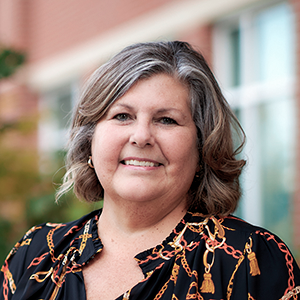
Robin Hebert, senior associate in CPE’s Student Access and Success Unit, has been instrumental in the agency’s work refining the state’s dual credit policy. We sat down with her to ask her about the latest trends, successes and challenges around early postsecondary opportunities.
Kentucky has expanded dual credit opportunities significantly in recent years. What do we know about the students who are participating and, just as importantly, what do we know about the students who aren't?
The good news is that we are seeing growth in dual credit participation among nearly every student group. Almost half of our high school students – a little over 47% - take at least one class.
That said, participation rates are lower among certain populations, such as our students with disabilities, students from low-income backgrounds, and even students who live in urban areas of the state, compared to participation rates in more rural areas.
Dual credit can give students early experience with college-level coursework. What does the data tell us about dual credit's role in influencing college-going decisions?
This is exactly why we set an attainment goal that focuses on including more students in the dual credit ecosystem, rather than focusing on increasing the number of dual credit courses an individual student might take. We want to focus on more students taking advantage of the program, rather than a subset, who was already focused on college, taking more courses.
We know that the college-going rate among students who did not take a dual credit course is 52.7%, while the college-going rate of students who took at least one dual credit course is 71.6%. As we see growth across all student demographics, we certainly are opening up the possibility of going to college to more students, including those who may not have ever considered it.
Regarding the students who take dual credit, but then don’t go on to college – what do you believe is main reason?
I don’t know the specific reasons, but I can speculate about what might be happening. I’m sure that some of it has to do with life situations and how they perceive postsecondary affordability.
However, we also know that some high school students complete an undergraduate credential, perhaps through CTE coursework, while still in high school and then immediately enter the workforce in a high-demand, high-wage sector. So, even though they don’t opt to pursue additional postsecondary education, we consider that a tremendous success.
When students have limited or no access to dual credit opportunities, what are the most common factors?
Fortunately, Kentucky has a very robust postsecondary system, made up of public and private four-year institutions, and our 16 KCTCS campuses. Most of our high schools are geographically close to a postsecondary institution and we have many different modalities that also help us reach as many students as possible. The high schools and colleges and universities have built some amazing partnerships!
That said, we continue to work on promoting dual credit among students and families who may not know about the opportunity and the scholarship that removes the barrier of cost and makes it financially accessible to any Kentucky high school student.
We also continue to work on other factors like teacher credentialing so that every high school can offer the menu of general education and CTE courses they consider most relevant and helpful to their students.
Students can earn college credit while still in high school, but earning college credit doesn't necessarily mean a student will complete a credential sooner. What are some of the challenges we, as a state, still need to work through to ensure that dual credit translates into meaningful progress toward - and potentially faster completion of - a postsecondary credential?
One of the biggest challenges is availability of postsecondary advising and support as students select courses. High school students and even high school staff may not understand Kentucky’s general education requirements and the specific degree requirements for all of the different programs and pathways for degrees and credentials. It’s important for us to help students enroll in courses that will fulfill the requirements for the programs and pathways they want to pursue, and on the flip side of that, not to accumulate “extra” credits that don’t really apply or move them toward completion of a degree or credential.
With so many options available to students, how can high school counselors and college advisors help students make informed decisions about dual credit, particularly about which courses make sense for specific education and career goals?
They should take advantage of every opportunity to learn about all the options that are available. CPE provides many different opportunities for professional development, including conferences, webinars and asynchronous training and resources through our website and Futuriti.org.
The Kentucky Advising Academy provides a wealth of high quality seminars and resources for high school and postsecondary practitioners, too. Our partners at KHEAA have outreach counselors and other resources to help students and families understand how to pay for dual credit courses, and most high schools have information available during family or back to school nights. Plenty of help is out there and everyone in the dual credit ecosystem is eager to help. It’s important for them to reach out!
As Kentucky continues to expand and refine dual credit, what do you think is the most important question we should be asking about the program over the next few years?
It’s really hard to think about just one, so I’m going to break the rules and include three:
- How can we make sure that all students, especially those not currently at the dual credit table, know about and have the opportunity to meaningfully participate? This includes awareness as early as middle school and more/better career exploration and postsecondary counseling.
- How can we continue to fund this growing dual credit system in a sustainable way?
- What are the best ways to support decision-making so that dual credit coursework saves students time and money toward their desired degree or credential?
Last Updated: 9/30/2026